

When it comes to choosing a fan for your living or working space, power consumption is a crucial factor to consider. In this blog, as a PMSM Ceiling Fan supplier, I will delve into how the power consumption of a PMSM ceiling fan compares to that of a tower fan.
Understanding PMSM Ceiling Fans
PMSM, or Permanent Magnet Synchronous Motor, is a technology that has revolutionized the ceiling fan industry. PMSM ceiling fans, like the ones available on our website PMSM Ceiling Fan, are known for their high - efficiency operation. The PMSM motor uses permanent magnets to create a magnetic field, which allows for a more direct and efficient conversion of electrical energy into mechanical energy.
One of the key advantages of PMSM ceiling fans is their low power consumption. These fans typically operate at a much lower wattage compared to traditional ceiling fans. For example, a standard PMSM ceiling fan might consume around 20 - 40 watts on its highest speed setting. This is significantly less than many traditional ceiling fans that can consume upwards of 70 - 100 watts.
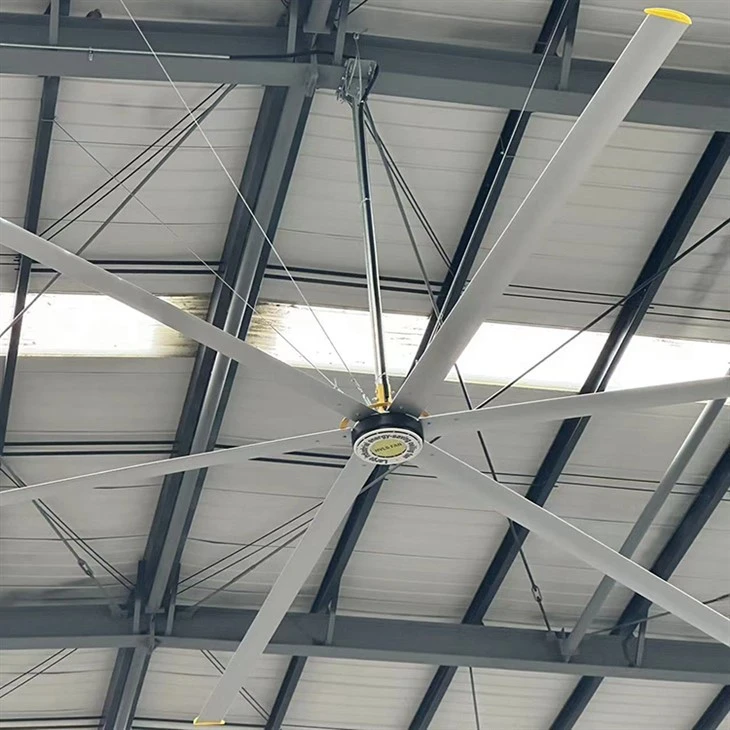

The energy - saving nature of PMSM ceiling fans is not only beneficial for your electricity bill but also for the environment. By using less electricity, these fans reduce the overall demand on the power grid and lower greenhouse gas emissions associated with electricity generation.
Tower Fans: An Overview
Tower fans are a popular choice for many consumers due to their sleek design and portability. They are tall, narrow fans that can be easily moved from one room to another. Tower fans usually have a variety of speed settings and features such as oscillation, remote control, and timer functions.
However, in terms of power consumption, tower fans generally consume more electricity than PMSM ceiling fans. A typical tower fan can consume anywhere from 40 - 100 watts on its highest speed setting. The reason for this higher power consumption is mainly due to the design and operation of tower fans. They use a different type of motor, often an AC induction motor, which is less efficient than the PMSM motor used in ceiling fans.
Factors Affecting Power Consumption
Motor Efficiency
As mentioned earlier, the type of motor used in a fan plays a significant role in its power consumption. PMSM motors are more efficient because they have a higher power - to - weight ratio and a lower amount of energy loss during operation. In contrast, the AC induction motors used in tower fans have more energy losses due to factors such as stator resistance and magnetic hysteresis.
Fan Size and Blade Design
The size and design of the fan blades also impact power consumption. PMSM ceiling fans often have larger blades that are designed to move more air with less effort. This means that they can achieve the same level of air circulation as a tower fan while using less power. Tower fans, on the other hand, have smaller blades and need to spin at a higher speed to move a comparable amount of air, which requires more energy.
Usage Patterns
How you use the fan also affects power consumption. If you use a tower fan on its highest speed setting for long periods, it will consume more electricity. PMSM ceiling fans, with their lower power consumption, are more suitable for continuous use. You can leave a PMSM ceiling fan running for hours without worrying too much about a significant increase in your electricity bill.
Real - World Examples
Let's consider a real - world scenario to illustrate the difference in power consumption between a PMSM ceiling fan and a tower fan. Suppose you have a living room that needs to be cooled. You can install a Feet Geared Industrial Ceiling Fan or use a tower fan.
If you run the PMSM ceiling fan on its medium - speed setting for 8 hours a day, and it consumes 30 watts, the total energy consumption per day would be 30 watts x 8 hours = 240 watt - hours. In a month (assuming 30 days), the total energy consumption would be 240 watt - hours x 30 days = 7200 watt - hours or 7.2 kilowatt - hours.
On the other hand, if you use a tower fan on its medium - speed setting, which consumes 60 watts, and run it for the same 8 hours a day, the daily energy consumption would be 60 watts x 8 hours = 480 watt - hours. In a month, the total energy consumption would be 480 watt - hours x 30 days = 14400 watt - hours or 14.4 kilowatt - hours.
This shows that over time, the PMSM ceiling fan can save you a significant amount of money on your electricity bill.
Cost - Benefit Analysis
In addition to the energy savings, PMSM ceiling fans also offer long - term cost benefits. Although the initial cost of a PMSM ceiling fan may be higher than that of a tower fan, the energy savings over its lifespan can offset the higher upfront cost.
Moreover, PMSM ceiling fans are generally more durable and require less maintenance compared to tower fans. Tower fans have more moving parts, such as the oscillation mechanism, which can wear out over time and require repairs or replacement.
Conclusion
In conclusion, when comparing the power consumption of a PMSM ceiling fan to a tower fan, it is clear that PMSM ceiling fans are more energy - efficient. Their low power consumption, combined with long - term cost savings and durability, make them a better choice for both residential and commercial settings.
If you are interested in purchasing PMSM ceiling fans for your space, whether it's a home, office, or industrial facility, we invite you to explore our range of products, including the Direct Drive PMSM Fan. We are committed to providing high - quality, energy - efficient fans that meet your needs. Contact us for more information and to start a procurement discussion.
References
- "Energy - Efficient Electric Motors: A Guide to Selection and Application" by the U.S. Department of Energy.
- "Fan Engineering: The Application of Air Moving Equipment" by the American Society of Heating, Refrigerating and Air - Conditioning Engineers (ASHRAE).